Day two. The options get built in a boardroom. The conviction does not.
Client
Ship Shape Health
Sector
Maritime wellness
Engagement
Sea Suite Intensive, two days
The decision
Stop selling to mariners. Start selling to the companies that employ them.
The problem he brought
Andrew Bruhl builds wellness programs for mariners. Men who spend months at sea on tugs, tankers and offshore supply vessels, with a galley, a bunk, and nowhere to train.
He came to me with what looked like a sales problem. Four corporate deals in the pipeline and none of them closing. Recurring revenue sliding every month since December. A founder who could not work out why the thing had stalled.
That is the problem I have been hired to fix two hundred times.
It was almost never the problem.
What the diligence found
Two weeks out I asked for a twelve month profit and loss statement. Not an estimate. An actual one.
He did not have one. He told me the business was profitable and gave me a monthly figure to prove it. Then he told me the truth in the same breath.
I've been winging this thing for a bit. The accounts are up so that's been the metric. No true data collection on P&L. Embarrassing but also honest.
Andrew Bruhl, pre-intensive questionnaire
So we built one. Bank statements, credit card detail, fifteen months of payment processor exports, every customer sorted by revenue and status.
The business had lost money every month of the prior year. Operating margin was negative twenty percent. Owner distributions ran to fifty-seven percent of revenue, and that was the money that made it feel profitable. It was coming out of reserves, not out of profits.
Then the recurring revenue chart, which he had never seen plotted.
Exhibit 1
The peak he did not notice
Monthly recurring revenue, indexed to the November 2025 peak.
What I look for first
Not the pipeline. The gap between the company a founder describes in conversation and the company that shows up in the bank account. It is almost always there, and he almost never knows it.
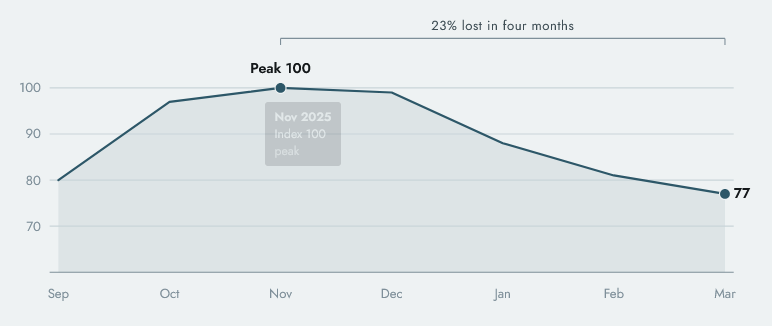
Source: payment processor export reconciled to business bank statements, prepared during Sea Suite diligence, April 2026. April is excluded as a partial month. Scale begins at 60, not zero.
View data
| Month | Index |
|---|---|
| Sep 2025 | 80 |
| Oct 2025 | 97 |
| Nov 2025 | 100 |
| Dec 2025 | 99 |
| Jan 2026 | 88 |
| Feb 2026 | 81 |
| Mar 2026 | 77 |
Underneath the revenue line was the reason for it.
Exhibit 2
Churn overtook acquisition, then ran away with it
Net change in paying subscribers, month by month.
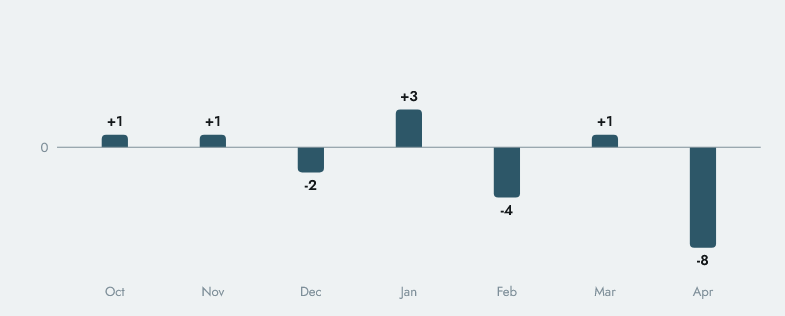
Source: subscriber cohort export, Sea Suite diligence. The active base fell from 29 in January to 18 in April. Of fourteen annual prepayments that came due that quarter, twelve were past due and had not renewed.
View data
| Month | New | Churned | Net |
|---|---|---|---|
| Oct 2025 | 7 | 6 | +1 |
| Nov 2025 | 2 | 1 | +1 |
| Dec 2025 | 3 | 5 | −2 |
| Jan 2026 | 6 | 3 | +3 |
| Feb 2026 | 4 | 8 | −4 |
| Mar 2026 | 4 | 3 | +1 |
| Apr 2026 | 1 | 9 | −8 |
He was good at the business
he was about to lose
This is the part people get backwards. He was
not failing at the thing he knew how to do.
Andrew ran ads. Mariners saw them, booked a call, and bought a program on a credit card. He closed better than half of those conversations and had done so for eighteen months straight. Then he coached the man himself, because he had been that man. He came off ships.
Fast, direct, and entirely inside his competence. The money arrived the same week the ad ran. The customer was one person and the decision was his alone. No committee. No procurement. No evidence file.
It also had a ceiling, and the ceiling had arrived. The creative was two years old and he had not touched it. The audience was a few thousand men. The average customer stayed five months and left, and by April more were leaving than arriving.
Look at where the money was actually coming from.
Exhibit 3
He called it a corporate wellness company
Share of 2025 revenue, by who wrote the check.

Source: reconciled 2025 profit and loss, Sea Suite diligence. Employer-paid revenue consisted of one paid pilot and one speaking engagement.
Ninety-four percent of revenue came from individual mariners paying out of their own pockets. He was running a direct-to-consumer subscription business and calling it a corporate wellness company. The company he described in conversation and the company in the bank account were two different businesses.
What the enterprise buyer wanted
Four corporate deals were open and none of them moved. He had been treating them as bigger versions of the sale he already knew how to make. They are not. They are a different sale with a different burden of proof, and the diligence showed he had built none of it.
No profit and loss statement. No cohort data. The pilot he had already run, which produced real results, had been packaged as a form-fill compiled into a PDF. When I asked what percentage of mariners actually opened the app, what weekly activity looked like at week four, week eight and week twelve, and what happened to incident rates and time lost to injury, the answer came back as exercise completion and weight loss. Those are coaching outcomes.
A fleet operator does not buy
transformation. He buys cost avoidance.
He was also asking roughly seven times what those same companies pay per member for an employee assistance program, and nobody had ever made him defend the multiple. I asked him to write one sentence down and not argue with it.
I don't have a good answer to defend the 7× premium.
Written down, day one
He had also never asked a single prospect what they currently budget to solve the problem, or how they would know it had worked. In a consumer sale you never have to. The buyer either puts the card in or he doesn't.
And the room itself was the part he hated.
I was cold, presenting this to a cold audience that was just like, well, what's he got? … I'm very good at creating that community. But when they start pinpointing me.
Andrew Bruhl, on a corporate meeting that went nowhere
The decision on the table
Not how to close more deals. Who Ship Shape sells to, what it has to prove, and who Andrew has to become to run it.
The Saturday before he arrived, his first real corporate contract signed. Three hundred mariners. That changed the stakes, not the frame. He now had a signed delivery obligation and no delivery system, and the market had answered the only question still open on the money.
Path A. Build to transact. Retire direct-to-consumer as the growth engine. Rebuild around employer-paid contracts priced per member per month. Build the evidence apparatus that buyer requires. Stop coaching, and hire coaches who do. Position for a strategic buyer in twenty-four to thirty-six months.
Path B. Lifestyle cap. Keep the ad engine and the one-to-one program. Deliver the contract already signed, decline the other three, make no hires, accept the ceiling and stop pretending otherwise.
There was a third path. It was the one he was on and it did not survive the first hour. Chasing enterprise contracts with a consumer company's evidence and a consumer seller's habits is not a strategy. It is a way to lose slowly, with a story attached.
Exhibit 4
The structural change, in one picture
What moves is the payer. The mariner still receives the program. He stops buying it.
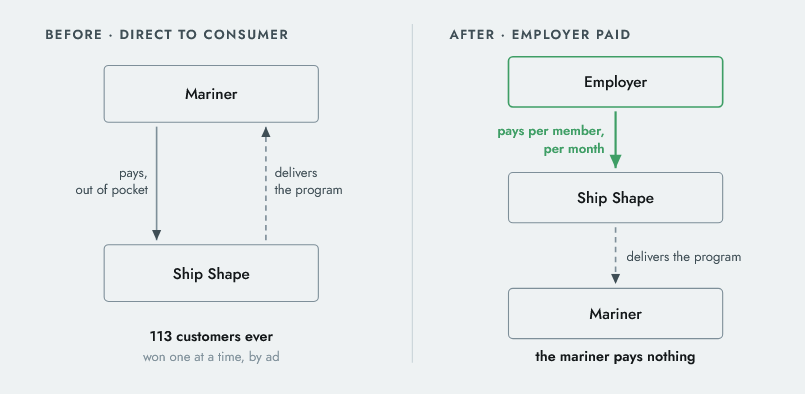
The old model won one customer at a time against a five month average life. The new model wins one contract and covers a fleet, on an employee benefit budget that already exists.
We modeled all three over twenty-four months before he chose. Not to tell him which one to take. To make sure that whichever one he took, he took it with his eyes open.
Exhibit 5
Three futures, priced out
Modeled revenue by path, indexed to 2025 actual revenue = 100.
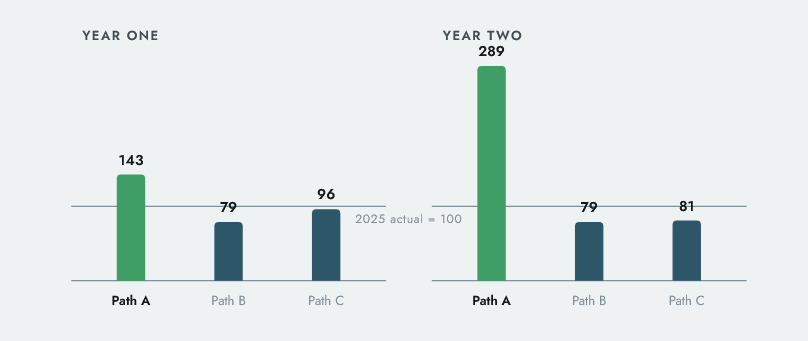
Modeled, not actual. Built during diligence from the reconciled profit and loss and a deal-by-deal pipeline model. Year two operating margin: Path A +28%, Path B +10%, Path C −25%. Enterprise value at year two: Path A three to four times revenue, Path B roughly three times a much smaller revenue, Path C non-viable.
View data
| Path | Year 1 | Year 2 | Y2 margin |
|---|---|---|---|
| A · Build to transact | 143 | 289 | +28% |
| B · Lifestyle cap | 79 | 79 | +10% |
| C · Status quo | 96 | 81 | −25% |
Look at the middle column before you look at the right one. Path B does not decline. That is what makes it dangerous. A ceiling is comfortable in a way a loss never is, and most founders who take it tell themselves they are being disciplined.
Path C is the one worth staring at. Doing nothing was the only option on the board that ended with the business worth nothing. Not deciding is a decision. It was already the most expensive one he had made.
What it cost him
The model said the cash cost of Path A was small. A modest drawdown, most of the reserve untouched, break-even inside a year. That was never what made it hard.
Path A took away every part of
the job he was good at and liked.
- The ad account, where money showed up the same week it was spent
- A sale he could close himself, in one conversation, better than half the time
- Coaching the mariner, which is the work he loves and the reason the company exists
- A price nobody had ever made him defend
- Feedback in days instead of quarters
- Being a mariner himself, which is the identity the whole brand was built on
That last one is not sentiment. He had stopped making content for the business months earlier, and when I asked why he gave me the real answer: he is no longer on ship, so it is hard to make anything that lands. He was still selling from an identity he had already left.
What he bought instead is a longer sale, a committee, a compliance review, a procurement cycle, and a buyer who wants incident rates and retention data rather than a before and after photo. He also stops being the product. Coaches deliver the program. He builds the company that sells it.
He had been telling himself he would commit once the business hit a certain monthly number. He got close to it in December, watched it fall for four straight months, and still did not move. That is a man selling himself on a goalpost, not a man moving toward a decision.
What he got in exchange
He gave up the ability to change one man's
life in twelve weeks. He bought the ability
to change how an industry treats its people.
A mariner buying a program with his own card is one man deciding to fix himself, on a ship where the food, the schedule and the culture are all still working against him. A fleet operator buying the same program for three hundred crew is the ship changing.
That is the whole trade, and it is why the decision is structural rather than tactical. One version of Ship Shape sells transformation to individuals. The other sells retention, safety and cost avoidance to the companies that decide what a mariner's life at sea is actually like. Only one of them has an industry at the end of it.
How the two days were built
Monday afternoon in a boardroom. The numbers he sent, against the numbers the bank showed. Path A laid out in full. A break. Path B steelmanned, deliberately, so that choosing it would have been a real choice and not a surrender. Then both on one table, scored by him, not by me.
He was not allowed to decide in that room. He left with the tension unresolved and one question to carry overnight: six months from now, on a Sunday afternoon, with the team off and the corporate deals grinding, what is the day like and who are you calling?
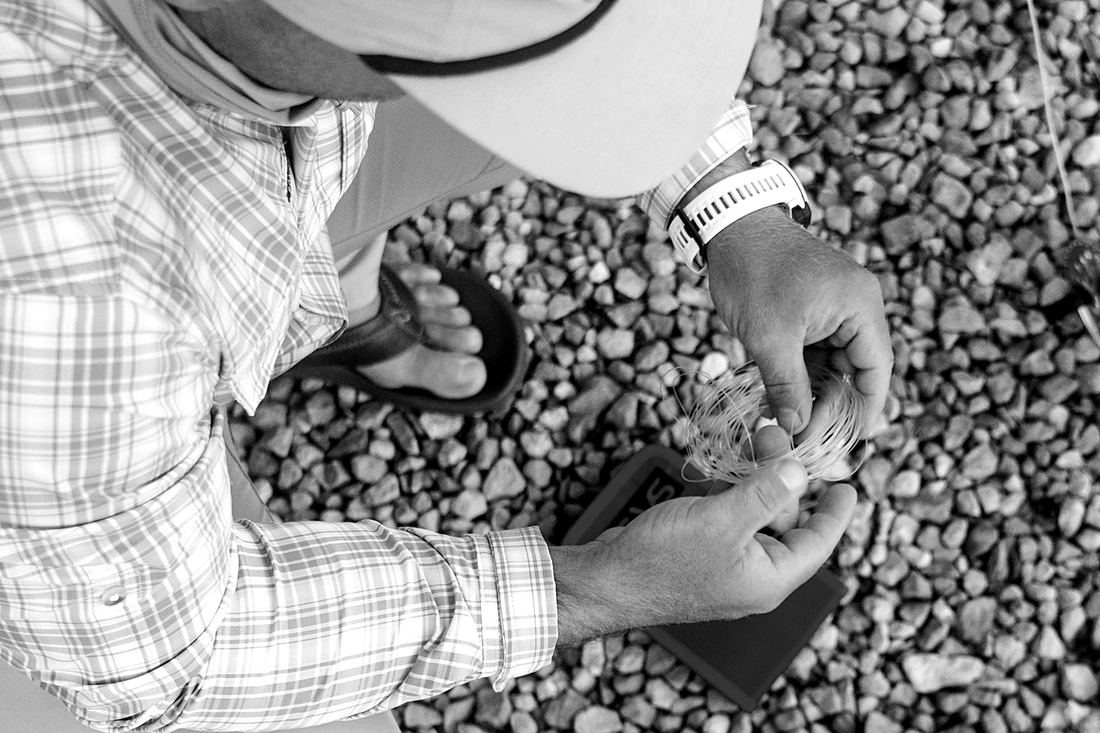

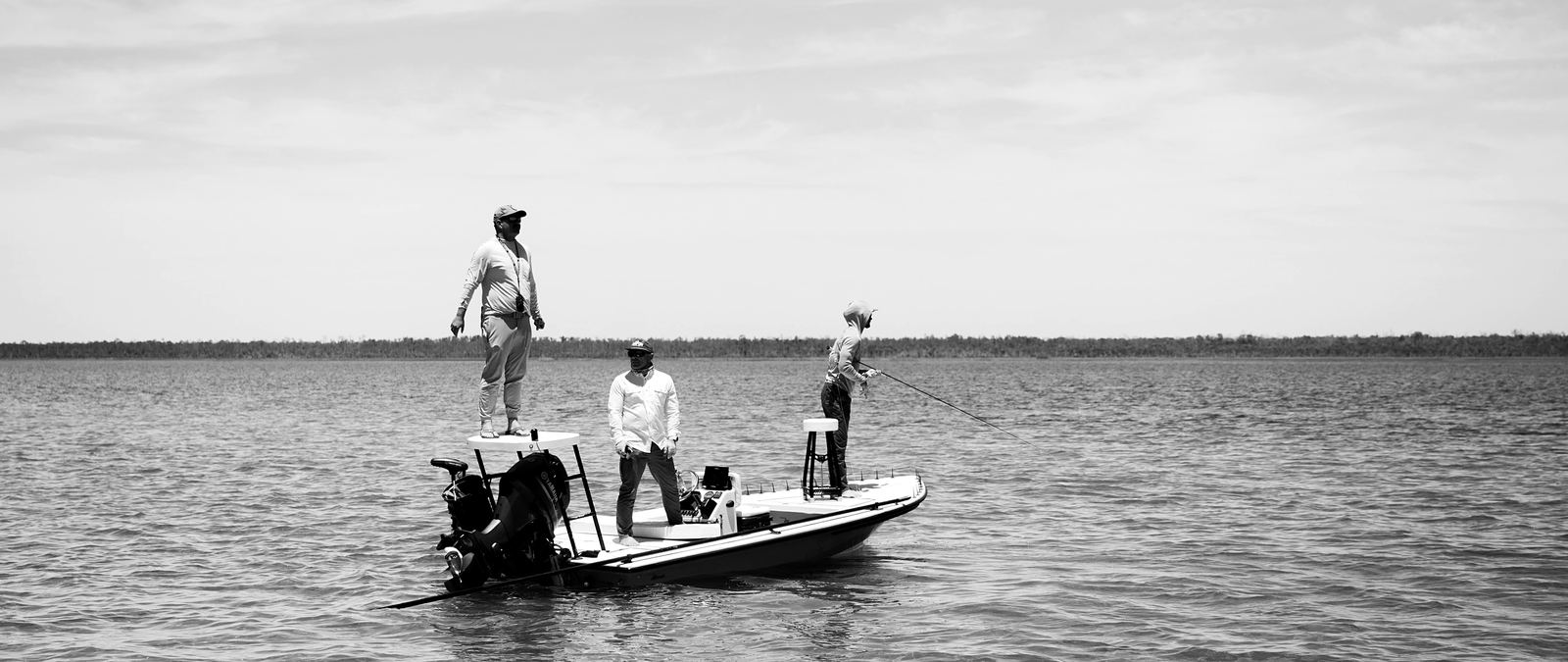
Day two, 6:30 a.m. Rigging at the ramp, then out. No agenda. No phones. Nigel takes the phone.
Tuesday, six-thirty at the ramp. Fly rods, the marsh, no agenda. You ask one question and then you fish for fifteen minutes and let the water do the processing. The boardroom is where the options get built. It is a terrible place to find conviction, because everything in it rewards the answer that sounds defensible.
The last question got asked while we were packing up the boat, with no preamble.
Build to transact, or lifestyle cap. Which one?
Day two, at the ramp
What happened next
He took Path A and went all in on business-to-business.
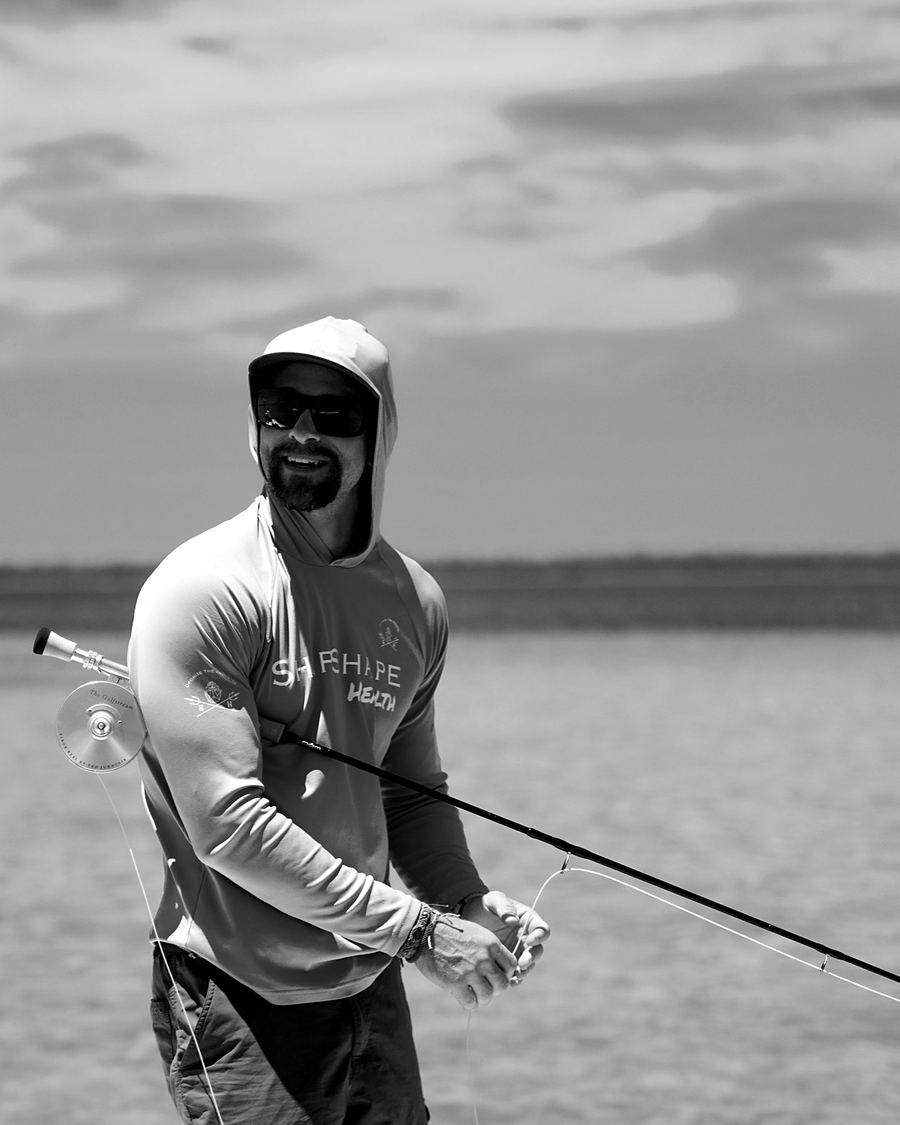
Andrew Bruhl, day two. The decision got made on this water.
4
corporate contracts signed in 45 days
2x
revenue more than doubled over the same period
3,200+
mariners covered every month, up from 113 individual customers
The definition of a customer changed. Before the intensive, a customer was one mariner who found the program through an ad and paid for it himself. There were 113 of those, ever. After it, a customer is an employer, and the mariners are members covered under a contract priced per member per month.
One of the four is publicly traded. Another covers two thousand mariners on its own. Both of them trace back to messages he sent on LinkedIn in 2021 and never followed. The pipeline had been there the whole time. What was missing was a man who had decided.
The sale he was afraid of is now the sale he runs. Compliance reviews at publicly traded and family-owned operators, navigated. Champions identified and armed to carry a deal to a decision maker. A maritime industry that moves slowly, worked patiently instead of chased. He set a contract price floor, stopped guessing at pricing, and started leading with the outcome a fleet operator actually buys: crew retention, in a market where operators are losing mariners to foreign labor.
He is building the delivery and onboarding systems the corporate model requires, roughly half finished at thirty days, and hiring coaches against contracted volume rather than hope.
What this case is actually about
Andrew did not have a pipeline problem. He had a business quietly running on the wrong customer, funded by distributions dressed up as profit, sold by a founder who kept reaching for the sale he was already good at. Every one of those is invisible until somebody puts it on one page in front of you.
The four contracts are the outcome. They are not the achievement. The achievement is that a man who had spent months reaching for the sale he was comfortable making chose the one that scared him, in two days, and has not revisited it since.
The longer you circle a decision, the less
you trust yourself to make the next one.
That is the real cost of indecision, and it does not show up on any statement. It shows up as a founder who has quietly stopped believing he is the person who can call it. Everything after that is downstream.
If you are carrying something you have been turning over for months, the information is not what you are missing. You already have it. What you are missing is a place where the noise comes off long enough to hear what you already think.